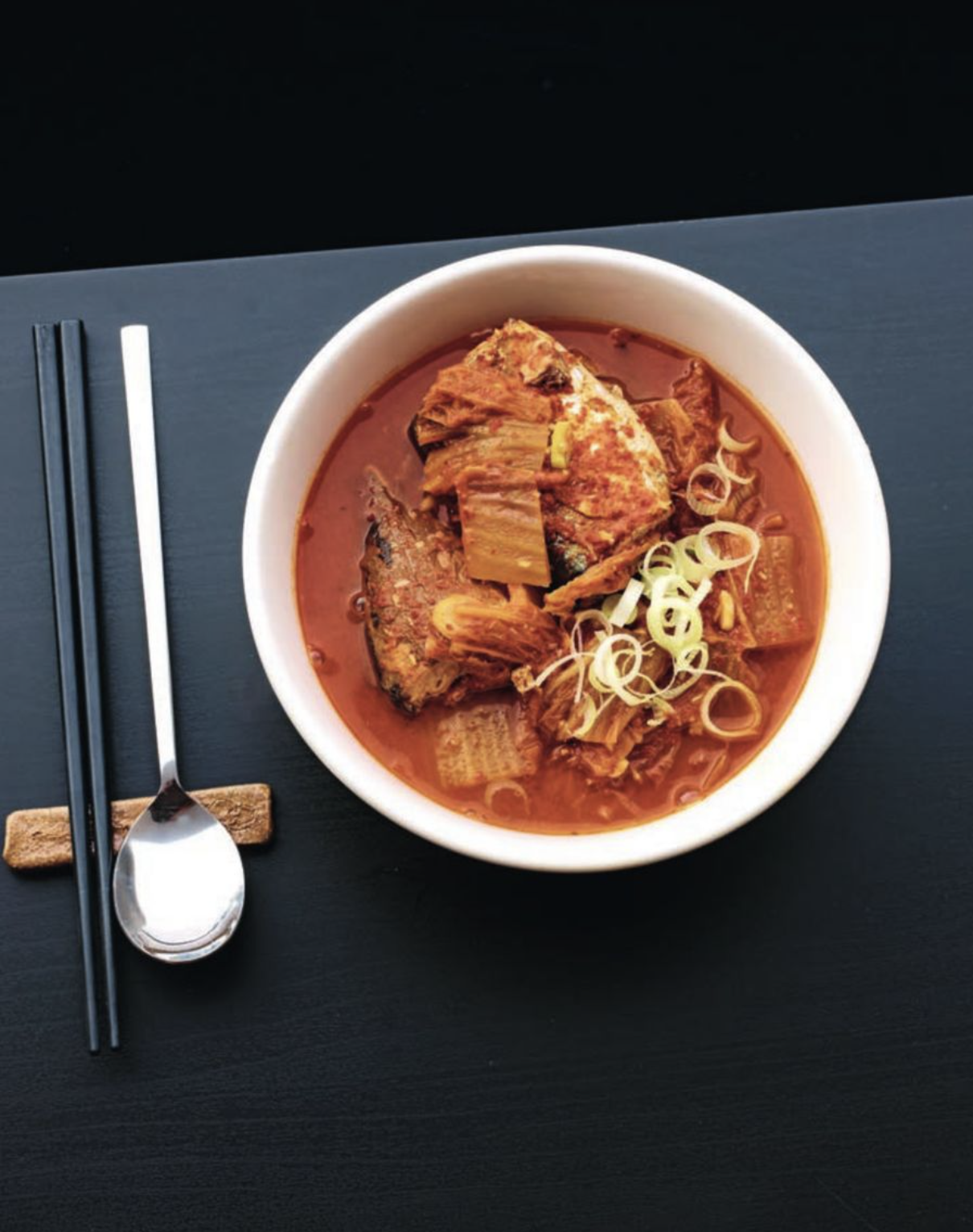
*Photo Credit: Korean Soups: Recipes for Soups and Stews That Nourish, Restore, and Delight
Kimchi stew, known in Korean as kimchi jjigae (김치찌개), is one of Korea’s most well-known home-style comfort foods, even nicknamed “the dish every K-drama fan knows.” Among the many different categories of Korean soups, it belongs to the jjigae family, which translates to “stew,” along with other popular dishes including doenjang jjigae (된장찌개) and budae jjigae (부대찌개). But what makes kimchi jjigae simply “the best,” standing out among the rest?
Valued for its bold flavors, versatility, and comfort, kimchi stew has become a staple of Korean home cooking. Its main ingredient, kimchi, is made by fermenting napa cabbage with seasonings such as garlic, ginger, and Korean chili flakes. Traditionally made with ingredients such as pork, tofu, or seafood, kimchi jjigae varies from household to household. It is often served piping hot along with white rice and small side dishes and shared across the whole dinner table.
For Chef Eddo Kim, tinned fish kimchi stew, known in Korean as tong jorim kimchi jjigae, holds a special place in his heart. Kim studied American history at the University of Pennsylvania, later moving to San Francisco where he co-founded Queens, a delivery-only deli. Queens now sells gochujang, doenjang, and gochugaru. In his cookbook, "Korean Soups: Recipes for Soups and Stews That Nourish, Restore, and Delight," he describes it as a “humble soup” that makes him nostalgic for his childhood and young adulthood. It’s his go-to that never fails to give him a sense of comfort.
His recipe begins by slowly cooking chopped kimchi in toasted sesame oil until it caramelizes, then layering in garlic, ginger, Korean chili flakes, fermented anchovy sauce, and salted shrimp to build complexity. Rice broth and canned fish, specifically tuna, mackerel, or Pacific saury, add savory depth, while tofu, scallions, and fresh green chili complete the stew. In his recipe, he highlights that tinned fish are “inexpensive, filling, and actually quite tasty,” adding a unique twist to the classic dish. What makes Kim’s version “simply the best” is that he uses the freshest ingredients and pays as much attention to the broth as to the finished product, as seen in the chapter of his book dedicated to the different types of broths. He truly pours his whole self into his cooking and takes pride in making “the best kimchi stew.”